This year, Remembrance Sunday falls on 8th November.
In the UK, Remembrance Sunday is held to commemorate “the contribution of British and Commonwealth military and civilian service[members] in the two World Wars and later conflicts”. (Source: Wikipedia)
Armistice Day (the end of the First World War) is acknowledged on 11th November each year, with Remembrance Sunday falling on the Sunday closest to this date.
The introduction of a second lockdown has instigated heated discussion online, with some Twitter users insisting they will be attending remembrance gatherings no matter the consequences.
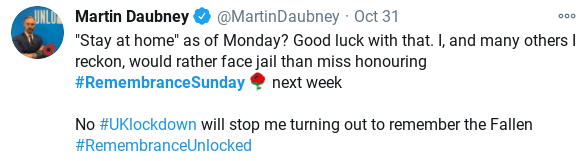
At the time of writing this post, the above tweet has gained 2.2k likes. (Source: Twitter)
Of course, many have tweeted their acknowledgement and acceptance of the restrictions, and have denounced others’ plans to breach the lockdown restrictions.
However, scrolling through #RemembranceSunday reveals that this is by no means a countrywide consensus.
I sympathise with the wish to show all due respect those who sacrificed so much in conflict. Having said that, I find it difficult to understand why this respect cannot be shown without gathering in large groups.
In my opinion, it is quite possible for us to take part in equally valid forms of remembrance, without refusing to comply with the current lockdown measures.
As the Royal British Legion states on their website, remote or socially-distanced alternatives to the usual gatherings include:
- watching the Remembrance Service at the Cenotaph on the television
- pausing to observe the two-minute silence inside our homes or on our doorsteps
- using their resources to teach our children or younger family members about “the service and sacrifice of the Armed Forces, and to join together in the hope for a brighter, peaceful future”.
Congregating en-masse just isn’t appropriate right now and there are safer alternatives available to recognise this important day that don’t involve potentially exacerbating the spread of COVID-19.
Sticking with remote or socially-distanced alternatives in no way downplays the importance of the day, nor does it affect our ability to acknowledge and reflect on the sacrifices those who serve or have served in the military and their loved ones.
We will still remember them, but we will do so in a way that protects the lives they fought (and fight) to defend.
If you would like to contribute to the Royal British Legion’s Poppy appeal, click here to visit their Poppy Shop.

 wallflowerhaze