It’s said with love… so why does it hurt?
I hate that I have to write this part, but this is the internet and I have anxiety. This is a personal post about my experiences as an autistic person. I may get things wrong and I can’t (and don’t) speak for all autistic people. My intention is to share my experiences (some of which align with the experiences of other autistic people with whom I have spoken) in an attempt to raise awareness and offer solidarity. Everything I write is just my opinion. I welcome friendly discussion and constructive feedback. Thank you.
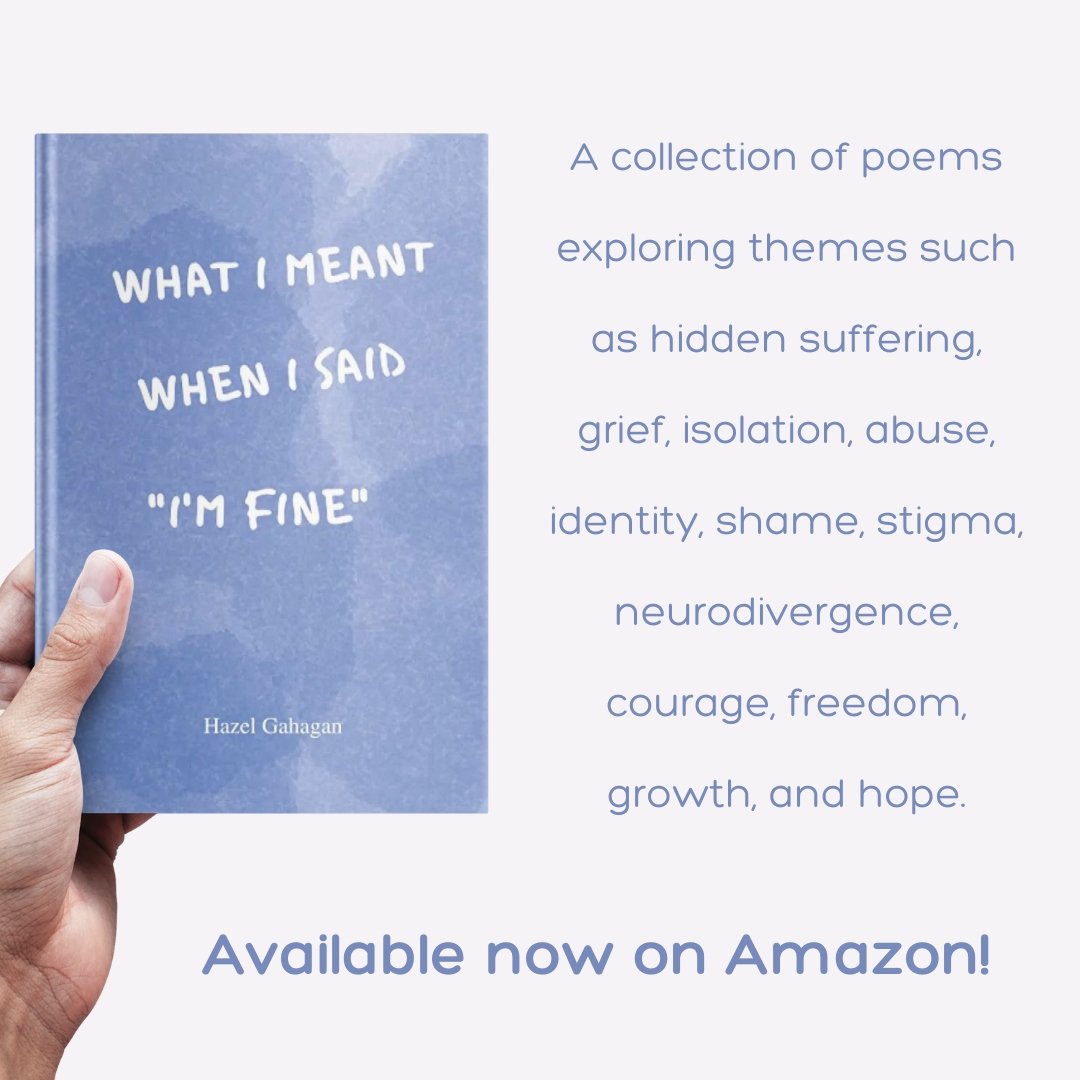
Click here to grab a copy of my book, What I Meant When I Said I’m Fine.
Please note: This post contains affiliate links. If you click and make a purchase, I may receive a small commission at no extra cost to you. For more information, please see my Disclaimer page.
I got my autism diagnosis at the age of 32.
I lived three decades knowing that my brain was different from other people’s, not understanding why, and believing that I was inherently broken. A bad person.
I didn’t even consider that I might be autistic, because the only understanding I had of what autism “looks like” was made up of the stereotypical image: a male child, semi/non-verbal, visible meltdowns, struggles in school. In reality, although this may be the experience of some autistic people, it’s certainly not the only experience or presentation of autism. Sadly, it was rooted in a narrow, ableist view that I’d picked up along the way and never questioned.

Unfortunately, I’m not the only one who had this view of autism. And because I was female, quite articulate, “A pleasure to have in class” and achieved reasonable grades, it didn’t cross anyone’s mind that I – as a little girl or as an adult woman – could be autistic. Instead, as I got older and my internal struggles became more visible, they were attributed to mental illness.
- When I couldn’t cope with my distress: mental illness.
- When I couldn’t maintain relationships: mental illness.
- When I couldn’t communicate effectively: mental illness.
- When I couldn’t leave the house or engage with the world: mental illness.
- When I eventually had a total breakdown because of the stress, anxiety and depression of living as an undiagnosed autistic person in an aggressively neurotypical world… okay that was mental illness, but occurring as a result of being autistic.
I learnt how to mask really well. It’s a skill I can still perform to a certain extent in small doses. I can “pass” as a neurotypical person in certain situations in order to maintain my safety or accomplish certain short-term tasks. So it’s not uncommon for people to see my “I’m autistic, please be patient!” badge, smile, touch my arm and say, “Oh wow, I would never have known you were autistic. You don’t look autistic.”
“Erm… thanks?”
I know they’re saying it because they want to let me know that I’m passing for “normal”. They want to relieve my anxiety and reassure me that my autism isn’t “showing”. They want to make me feel better, but in reality, it’s a gut-punch that lets me know that it would not be safe to unmask with this person, or in this environment. If I had any intention of unmasking as I began to feel more comfortable, that intention just left the building via a window.
It comes with the implication that it’s a good thing that I don’t “look autistic”. In other words, “Well done for not showing any signs of autism, because if you did, I would judge you”.

So, let’s say I was to experience joy (a widely-accepted positive emotion) that caused me to starting stimming (e.g. rocking back and forth, shaking my hands, bouncing on my tiptoes). Or maybe I get excited and start talking about my special interests, going into a monologue because I am less aware about when I should stop talking. Or maybe I start to feel overwhelmed by sensory overload and have to step outside to ease my distress.
At best, I’m led to believe that it would be seen as strange and humiliating. At worst, it could put me at risk of being rejected, restrained or even wrongly hospitalised. This might seem like a leap, but autistic people are often at risk of having their non-harmful behaviours misread as being a danger to themselves or others. As I mentioned previously, I have experienced my autistic traits being misdiagnosed as mental illness. This can lead to unnecessary and harmful escalation, such as people calling emergency services or attempting to “intervene” themselves.
So what do I hear when you congratulate me on Not Looking Autistic?
I hear that it’s not okay to be autistic. I hear that you wouldn’t like me if you knew I was “visibly” autistic. I hear that you think “looking autistic” is a bad thing. Stims must be supressed. I must try to “look normal”, even if I have no idea what that means. I must maintain the mask. I’m back to trying to remember the neurotypical script to make sure my autistic brain doesn’t have the audacity to affect your experience of this interaction. Focus on not moving my hands. Focus on regulating my facial expressions. Focus on maintaining eye-contact. Focus on not flinching when someone invades my personal space. Focus, focus, focus, and pray it will soon be time to leave.
It’s an encouragement to hide who I am.

Furthermore, it is offensive to those autistic people who are not able to mask their more visible autistic traits or behaviours. We shouldn’t be focusing on encouraging “successful” masking; we should be focusing on how we can create environments that are accessible and inclusive for everyone, regardless of masking ability. Being unable to mask is not a failure or something that can necessarily be “achieved” by “trying hard enough”. For many autistic people, it’s just not an option.
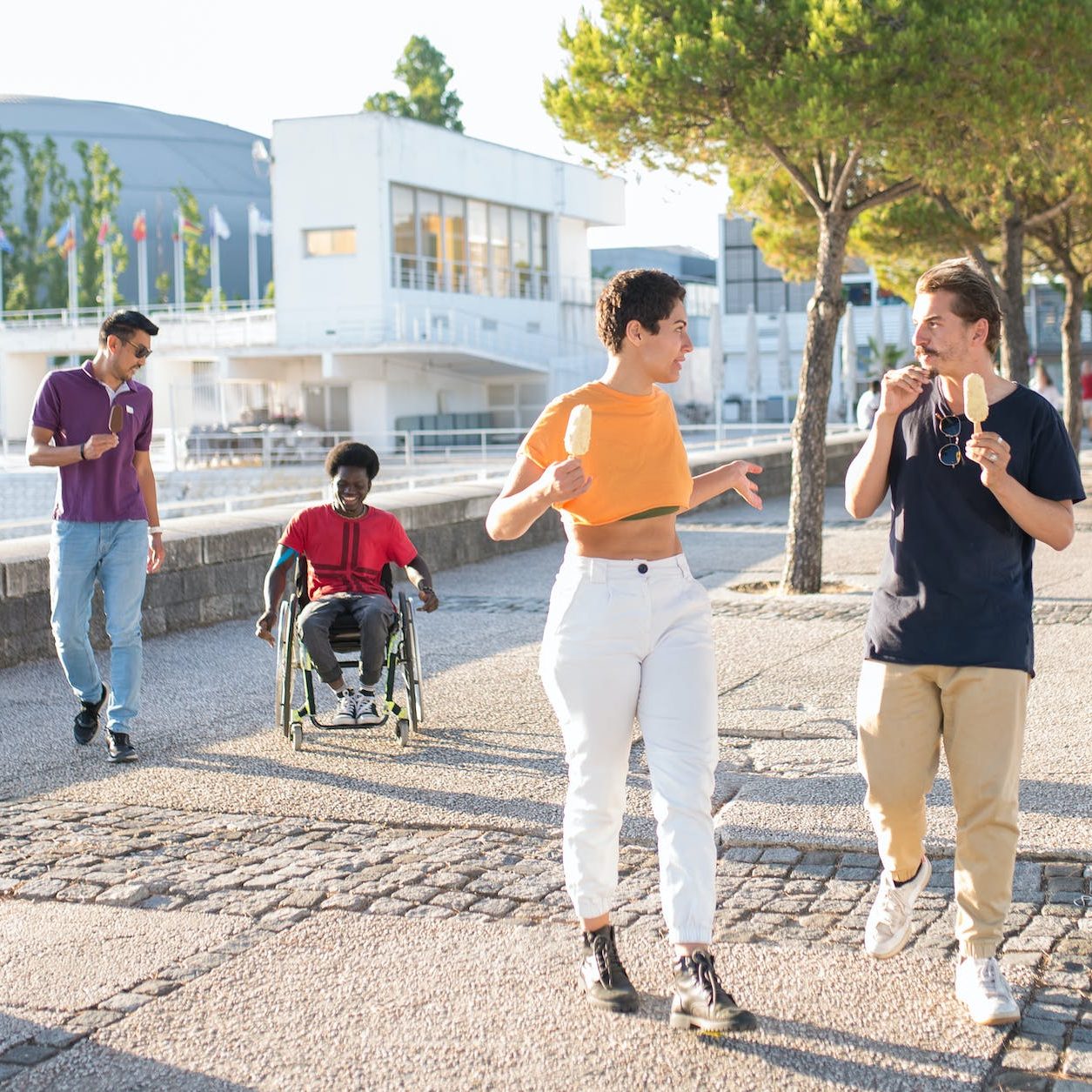
Finally, there is no Autistic Look. That stereotype of the male child experiencing a distressing meltdown in public is just that; a stereotype. Of course, it does exist, and despite growth in understanding around autism and gender, it still currently dominates the presentation of those diagnosed with autism. But only because that is the presentation we were told for so long that this is the only presentation.
When you tell me I don’t look autistic, it can also feel like you’re telling me you don’t believe I’m autistic. I had to fight hard to even get in the room with the professional who could diagnose me. Once inside that room, the diagnosis was clear: Autism. it just took 32 years of struggling to get there. It’s important to me that people understand that trying to dismiss or diminish my autism isn’t helpful to me. It’s actually incredibly unhelpful to me.

We’re still catching up; recognising and diagnosing all those “lost girls” – like me – who slipped under the radar. We’re still adjusting our understanding of how being autistic affects people in different ways. Diagnosis is still woefully inaccessible to many autistic people and self-dx is still widely invalidated.
Being able to take care of myself and being able to live well includes acknowledging, understanding, and loving my autistic brain; my autistic self. I am autistic, and telling me I don’t “look” autistic, doesn’t make me any less autistic, it just makes me more anxious to live my authentic, autistic life.
But we are moving in the right direction. We are learning and unlearning. And because of this, I have hope that “You don’t look autistic!” will one day become a thing of the past.
But hey, what do I know? We’re the ones who just don’t understand social norms and etiquette, right…? Heh. That’s a conversation for another time.
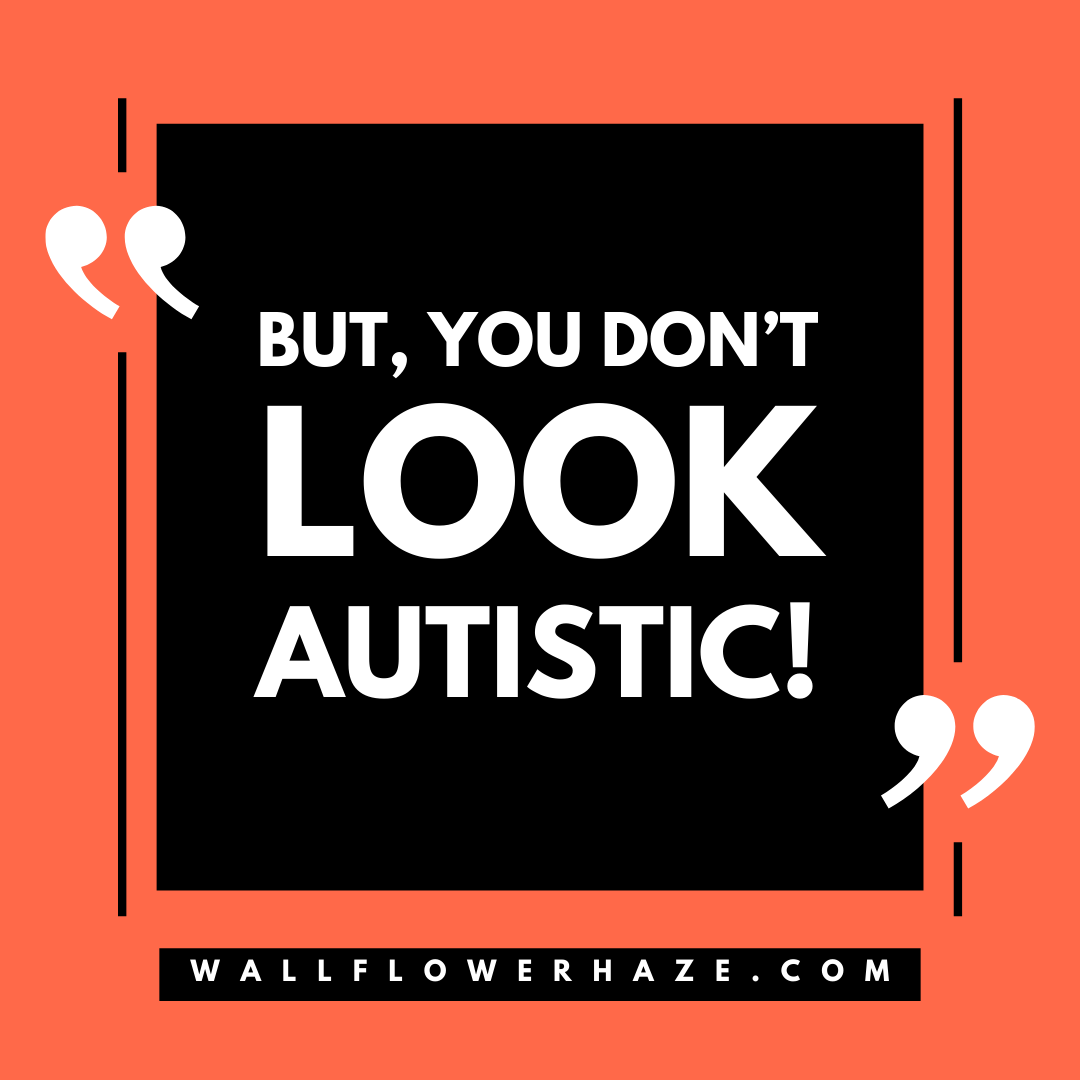
Autistic people! I want to hear from you. Do you have any pet peeves from conversations with well-meaning but misguided neurotypical people? Have you encountered other statements like “this “You don’t look autistic!” that do more harm than good? Tell me about your experiences in the comments.
Neurotypical people! I’d love to hear how you have learnt to support the neurodivergent people in your life. Have you unlearnt some old ways of thinking? How has it improved your relationships with your neurodivergent friends, colleagues, or family members? Tell me about your experiences in the comments too!
If you like my blog and/or find it useful, please consider donating to help me cover the costs of maintaining it. You can shout me a coffee on Ko-fi, or drop a tip in my PayPal. You can also click here to see more of my recommended products and help to support this blog with your purchases.
Oh hey, did you know I wrote a book?
Click here to grab a copy of my book, What I Meant When I Said I’m Fine.
If you like my blog and/or find it useful, please consider donating to help me cover the costs of maintaining it. You can shout me a coffee on Ko-fi, or drop a tip in my PayPal. You can also click here to see more of my recommended products and help to support this blog with your purchases.

 wallflowerhaze